



Date: 15 Jun 2022
What Is Fenugreek? Benefits, Uses and Its Role in Ayurveda
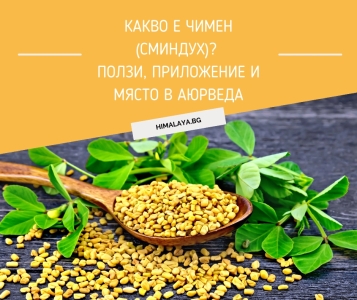
If you have ever tasted the traditional Bulgarian spice blend known as Sharena Sol, you have probably already experienced the distinctive flavour of fenugreek—known locally as Chimen. Far more than just a culinary spice, fenugreek (Trigonella foenum-graecum) has been valued for thousands of years as both a food and a medicinal herb.
Today, fenugreek remains an important part of Ayurvedic medicine, where it is traditionally used to support healthy digestion, metabolic balance, skin health, and strong, healthy hair. Modern scientific research has also shown growing interest in this remarkable plant because of its rich nutritional profile and diverse bioactive compounds.
Traditional Uses of Fenugreek
Fenugreek has been used for centuries across many cultures, each recognizing its unique properties.
A saying traditionally attributed to the Prophet Muhammad states:
"If people knew the true value of fenugreek, they would pay its weight in gold."
In Traditional Chinese Medicine, fenugreek has long been valued as a warming, restorative herb. Ancient Greek physicians used it for respiratory comfort, while in the Middle East it was traditionally incorporated into herbal preparations for dry and irritated skin.
In Ayurveda, fenugreek is regarded as a warming herb that traditionally helps balance Vata and Kapha doshas. It is commonly included in herbal formulations designed to support digestion, healthy metabolism, and the maintenance of healthy skin and hair.
What Does Modern Science Say?
Fenugreek has become one of the most extensively researched medicinal herbs in recent decades. Scientists are particularly interested in its soluble fibre content, steroidal saponins and other naturally occurring bioactive compounds.
Monographs published by ESCOP and the World Health Organization (WHO) describe the traditional use of fenugreek seeds as supportive within dietary approaches aimed at maintaining normal glucose and lipid metabolism.
Germany's Commission E has documented the herb's mild antiseptic properties, while the British Herbal Pharmacopoeia describes its traditional use for supporting overall well-being.
Current research continues to investigate fenugreek's potential role in supporting healthy blood glucose levels, cholesterol metabolism and satiety. However, these findings should not replace medical advice or prescribed treatment.
What Is Fenugreek?
Fenugreek (Trigonella foenum-graecum) is an annual herb belonging to the Fabaceae (legume) family. Native to the Mediterranean region and Western Asia, it is now widely cultivated throughout India, the Middle East and many parts of Europe.
Both its seeds and leaves are used. The seeds have a distinctive slightly bitter, nutty flavour that makes them a popular ingredient in cuisines around the world.
A Brief History
Archaeological evidence suggests that fenugreek was already being cultivated in Ancient Egypt thousands of years ago. It later spread throughout Greece, the Middle East and India, where it became firmly established in traditional medicine and everyday cooking.
Today, fenugreek remains one of the world's most popular culinary and medicinal herbs.
Active Compounds in Fenugreek
Fenugreek's nutritional value comes from its naturally occurring bioactive compounds, including:
- soluble fibre (galactomannans)
- steroidal saponins
- flavonoids
- alkaloids
- lecithin
- plant proteins
- iron
- magnesium
- potassium
- B-complex vitamins
Together, these compounds contribute to fenugreek's long-standing reputation in both traditional herbal medicine and modern dietary supplements.
Key Benefits of Fenugreek
Traditionally, fenugreek is used to:
- support healthy metabolic balance;
- contribute to normal lipid metabolism;
- promote satiety as part of a balanced diet;
- nourish dry and sensitive skin;
- strengthen and condition the hair;
- provide valuable plant protein and dietary fibre.
Why Is Fenugreek So Highly Valued in Ayurveda?
According to Ayurveda, fenugreek has warming qualities and is traditionally used to help maintain the balance of Vata and Kapha doshas. It is included in numerous classical Ayurvedic formulations designed to support digestion, metabolism, skin and hair health.
Its rich nutritional profile also makes it an important food ingredient, reflecting Ayurveda's philosophy that proper nutrition and herbal wisdom work together to support long-term well-being.
Where Can You Find Fenugreek in Himalaya and Charak Products?
Ayurslim
Fenugreek is one of the botanical ingredients in Ayurslim, a traditional Ayurvedic formula developed to support weight management when combined with a balanced diet and regular physical activity.
The formula combines fenugreek with Garcinia cambogia, Gymnema sylvestre and Guggul, herbs traditionally used in Ayurveda to support healthy metabolism.
Himalaya Foot Care Cream
In Himalaya Foot Care Cream, fenugreek is combined with honey, turmeric and Sal Tree to help soften dry, rough and cracked feet while supporting overall skin comfort.
Conclusion
Known as Chimen in Bulgaria and Fenugreek around the world, this remarkable herb has been valued for thousands of years in both traditional medicine and everyday cooking. Its rich nutritional composition, long history of use and important role in Ayurveda continue to make fenugreek one of the world's most respected botanical ingredients.
Whether enjoyed as a spice or as part of an Ayurvedic herbal formulation, fenugreek remains an excellent example of how ancient herbal wisdom continues to inspire modern wellness.






Post comment